5 Ways to Manipulate Time in Adobe Premiere Pro
Master Rate Stretch, Speed/Duration, Posterize Time, Interpret Footage, and Time Remapping in Premiere Pro.
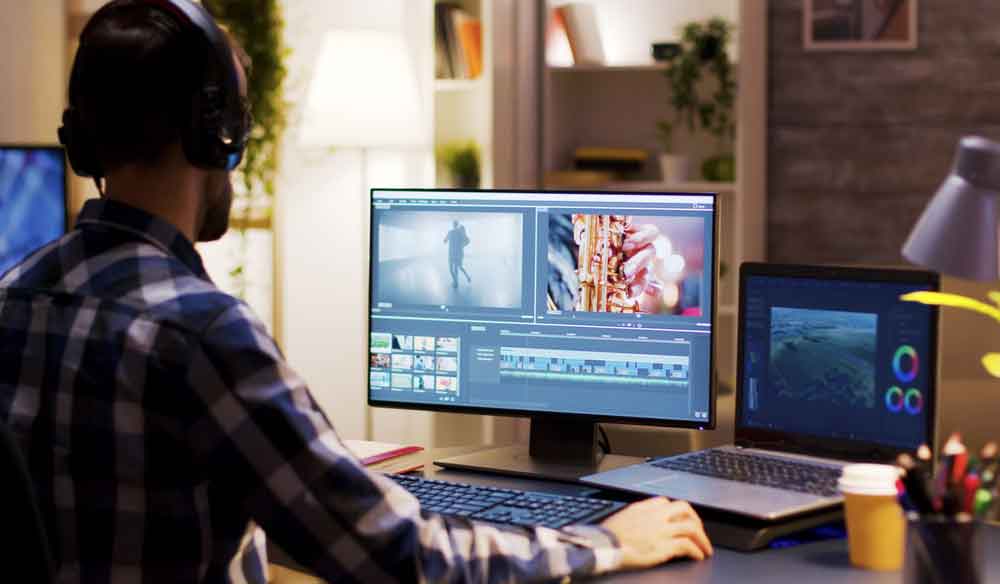
5 Ways to Manipulate Time in Adobe Premiere Pro
When you're editing video, you're essentially playing with time. It's called nonlinear editing for a reason — you're moving and shifting clips around on a timeline, creating an entirely new sequence of events. Premiere Pro has a handful of tools that allow you to dive down and manipulate time on a clip level.
1. The Rate Stretch Tool
One of the fastest ways to manipulate time in Premiere Pro is via the Rate Stretch tool. Simply press the R key to bring it up. Hover over the edge of a clip to watch the tooltip activate. Click-and-drag to speed up or slow down your video. The speed is displayed via a percentile in the clip name. If you can't see it, click on the Wrench icon and activate Show Video Names.
2. Speed/Duration Controls
For more precise control, grab the layer and go to Clip > Speed/Duration. This dialogue box allows you to manually type in a specific speed or duration. To keep the clip In and Out points set in the same place on the timeline, simply unlink the Speed and Duration controls before making changes.
The Clip Speed/Duration can also reverse the speed of a clip, maintain the audio pitch, and activate ripple delete options. When changing speed, choose between three interpolation methods: Frame Sampling, Frame Blending, or Optical Flow.
3. Posterize Time
The Posterize Time effect allows users to manually set a frame rate. This effect is often used to stylize videos. For example, you can get a hand-animated or stop-motion style look by bringing the FPS down to 12-18. Or, you can get a more cinematic look by bringing 60fps footage down to 24fps.
4. Interpret Footage
To change the frame rate of a clip at the project level, use the Interpret Footage dialogue box via Clip > Modify > Interpret Footage. This shows you the native frame rate but also lets you assume a custom frame rate.
The difference between Interpret Footage and Posterize Time is that Posterize Time won't change the duration, and it's applied on a clip level. This feature is especially useful when importing image sequences from other programs.
5. Time Remapping
If you want to get serious about playing with time, you'll want to learn Time Remapping. Right-click on a clip and select Show Clip Keyframes > Time Remapping > Speed. You can manually add and remove speed keyframes directly on the clip via Ctrl + Left Click. Drag the line up to increase speed, down to decrease. To ease the ramping between speed changes, drag and spread out the handles of each keyframe.
A Note on Time Interpolation
Depending on your source footage, you might have to play around with various interpolation methods. In an ideal situation, shooting at a higher frame rate gives you smooth slow motion because you have more frames to work with — the computer isn't creating or blending frames together.