Beast of the Seine: Who Profits From a Hero?
The reward is more interesting than the reveal. Simone gets meat; the people around her discover other uses for a heroic reputation.
Visual commentary on selected scenes from Jon Portman's animated short, based on source frames and publisher captions with supplementary AI-assisted audio checks. Includes later-scene spoilers; this is not a continuous audiovisual review of the whole film.
A dog gets called a hero and receives a steak. That is a clear transaction. What makes these scenes more interesting is the less visible transaction happening around it: people begin attaching their own interests to the dog's reputation.
The useful question is therefore bigger than how early an audience guesses the trick. What does the heroic version of events allow everyone else to do? The meat reward, the mayor's appeal and two shop signs offer a concrete way into that question.
Praise is abstract; the steak is not
Around 02:40, Simone is surrounded by approving people. At 02:46, a piece of meat is presented with a bright glow; by 02:50, the dog has it in her mouth. The captions connect that gesture explicitly to a deserved reward. The visual emphasis makes the exchange easy to grasp without treating an animal's motives as human moral reasoning. For the onlookers, 'hero' describes a virtue. For the dog, the food is a tangible consequence. My reading is that the joke begins in that mismatch. It does not require every person giving praise to be dishonest, and it does not establish the cause of each earlier fall. The reward itself is enough to ask what behavior the community is encouraging.
The people find their own rewards
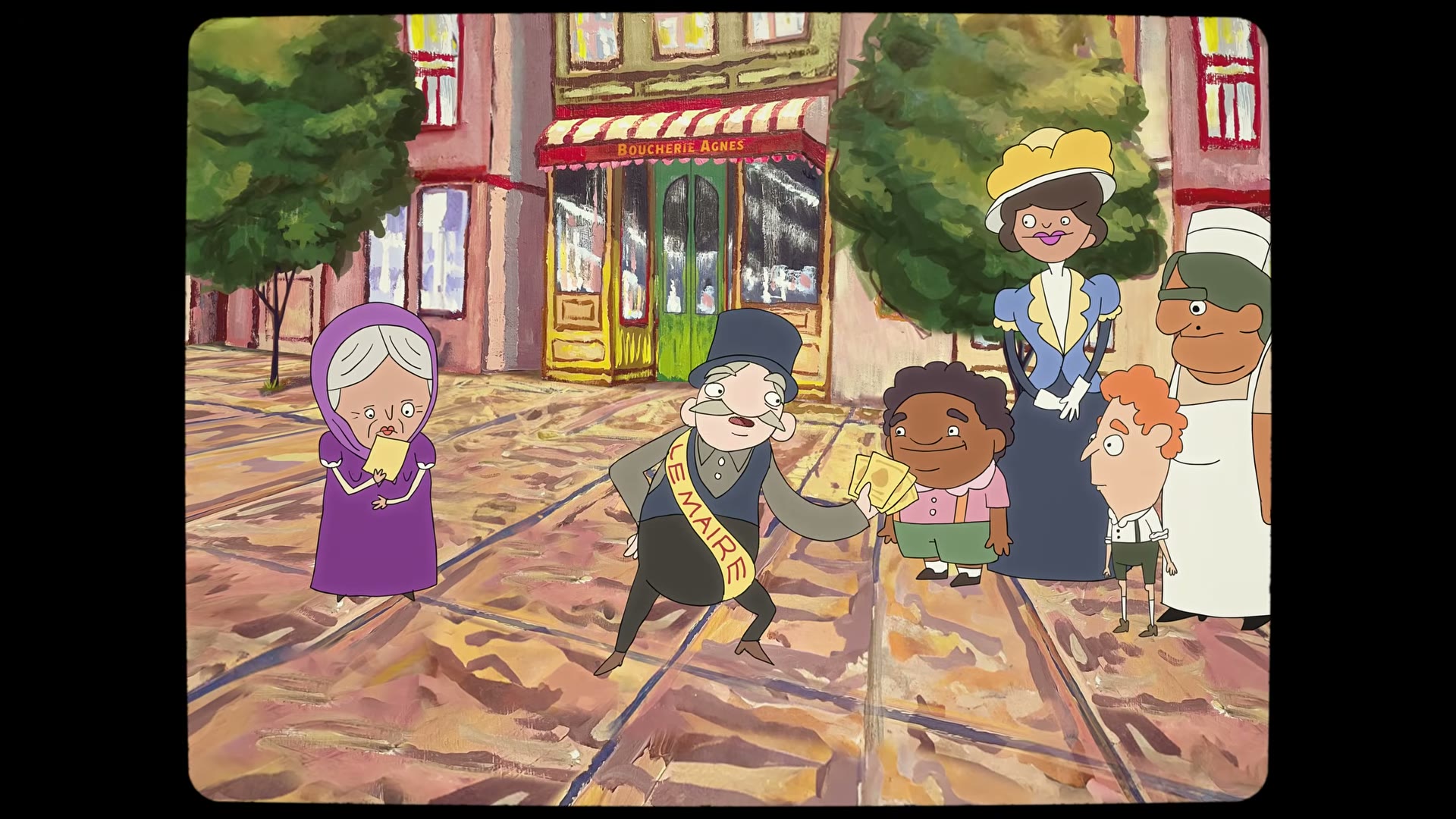
04:18–04:22 · MayorA vote for me is a vote for Simone.
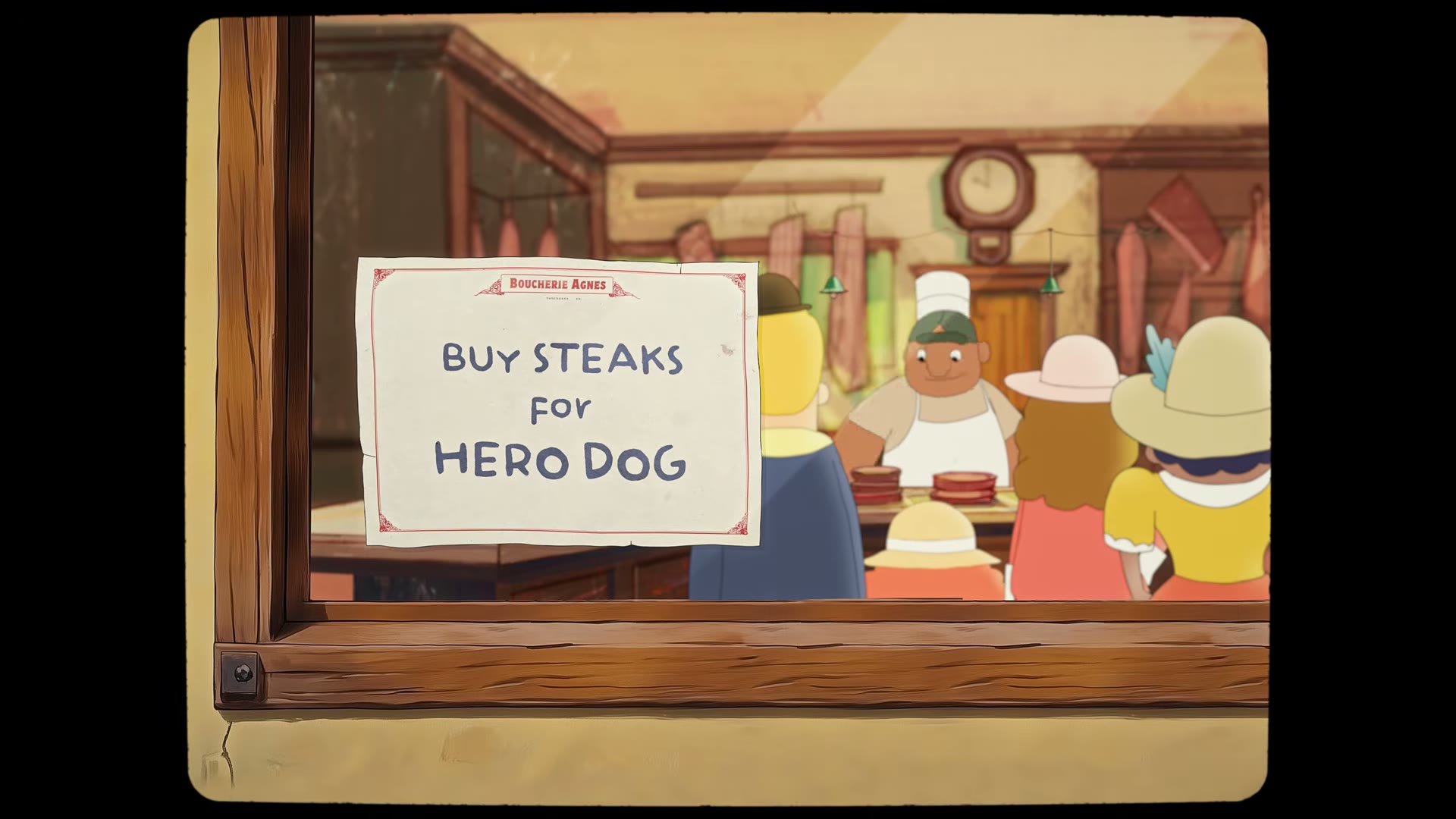
Around 04:18–04:22, the mayor's captioned appeal ties a vote for him to a vote for Simone. The association is the offer: the animal's achievement becomes something a politician can stand beside. By 06:54, the butcher's window makes another use explicit with 'BUY STEAKS FOR HERO DOG.' The following images place people in front of the counter. We can see an appeal to buy; we cannot calculate sales or declare every person in the shop complicit in a deception. That distinction sharpens the criticism. Benefiting from a story does not mean knowing it is false. It can simply make that story more comfortable to repeat. The dog wants meat, while the humans want approval, attention or custom. Their different appetites keep the same reputation in circulation.
A second sign complicates the cynical reading
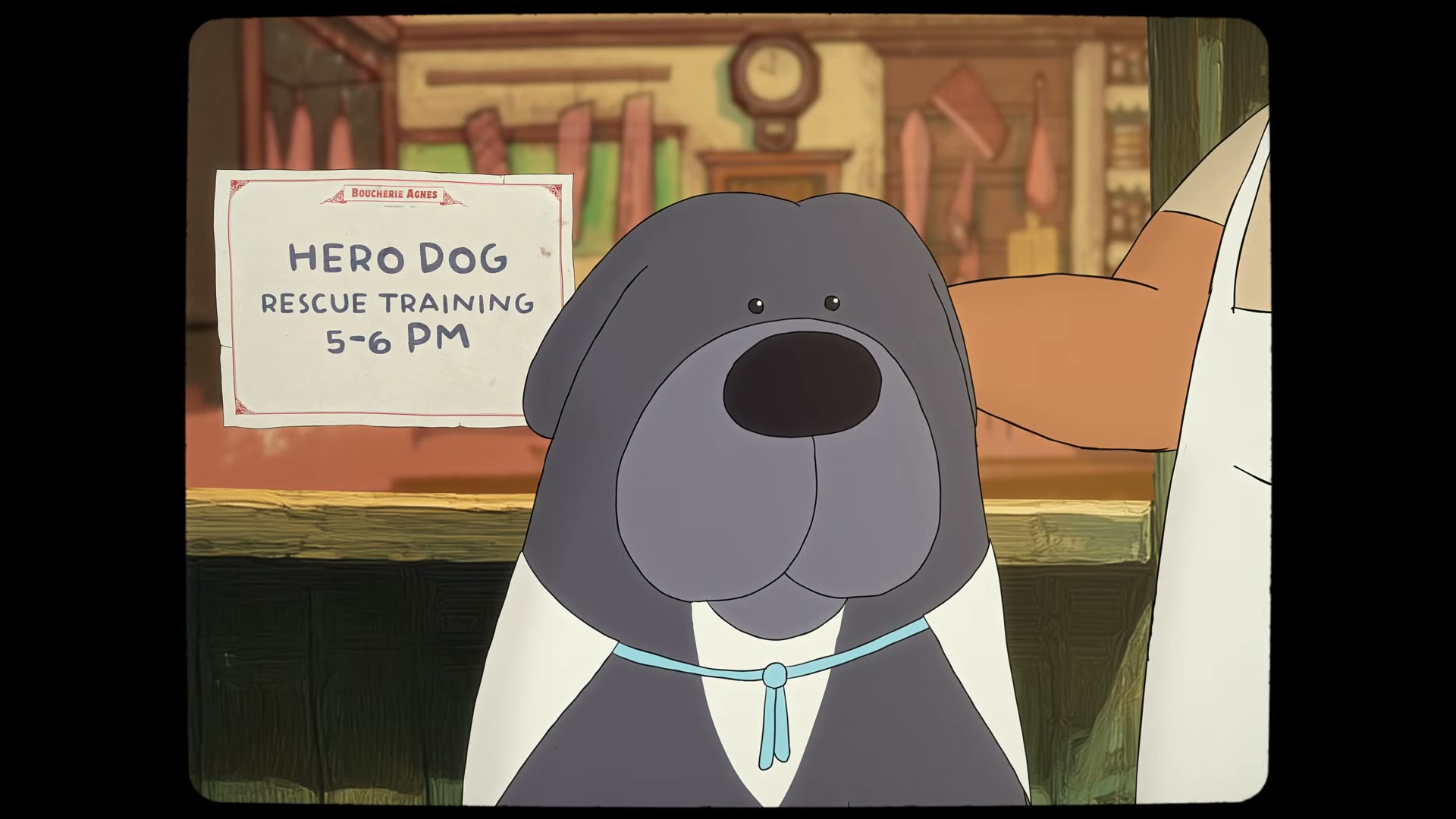
The later material prevents a neat conclusion that everyone only exploits Simone. At 10:55, the shop window advertises 'HERO DOG RESCUE TRAINING,' with an afternoon time slot. Around 11:00, a child is in the water while the dog and other figures are visible nearby. By 11:20, the group is assembled for a photograph. To me, the new sign suggests a more useful response than merely replacing 'hero' with 'beast': an appetite and a skill can be given a different setting in which to operate. That is an interpretation of the arrangement, not proof of a formal reform or a guarantee that the problem is permanently solved. The group photograph also keeps public image in play. This is why I would not judge the short solely on whether its central reveal is surprising. The stronger material asks what people build around an appealing explanation, then lets their response become part of the joke.