Interview with a Hero opens on a question it won’t answer on television
A television question sets the scene. Changing voices and repeated silhouettes make room for Chhay’s own history.
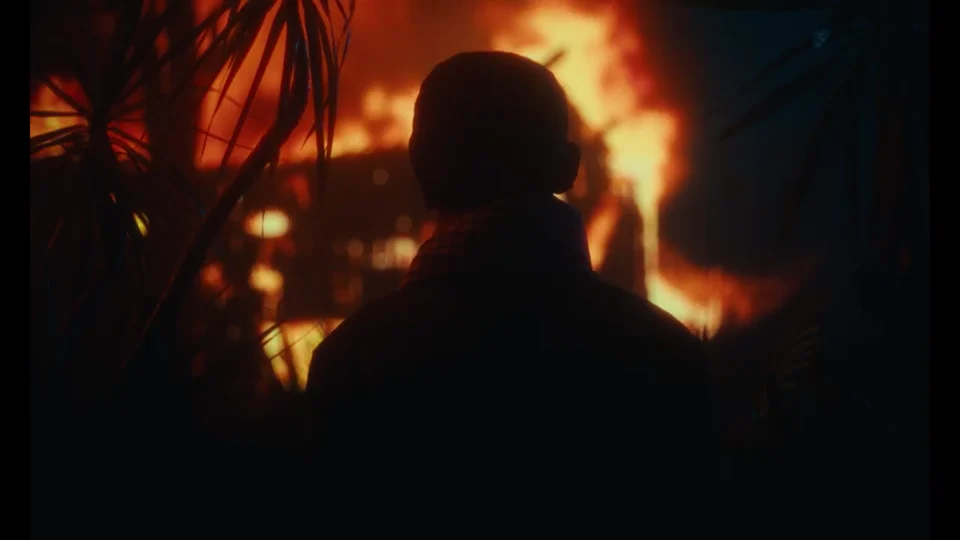
The complete television-to-workbench prologue and the transition into the first Sydney scene, about 00:00–01:08 in the Short of the Week online edition.
The television host in Celeste Diep’s Interview with a Hero has a face, a chair and a set. Chhay spends much of the opening as a shape against light. The film puts those two images next to each other before it gives us a place or date. It makes the TV interview feel like the least complete account of a man we have just met.
The television has the clearest picture
In the first seconds, the presenter’s face sits within the curved corners of a television set. She asks why his family stopped performing shadow puppetry. Her question stays with us as the camera leaves the television. The film then gives us the back of a man’s head against an orange light, followed by a similarly placed figure against a much less controlled orange glow. A house is burning beyond him. The next words we hear come from a different voice. A speaker says her father is a mystery to her. The sequence moves from a question on television to someone admitting how little she knows.
The fire cuts to an ordinary room
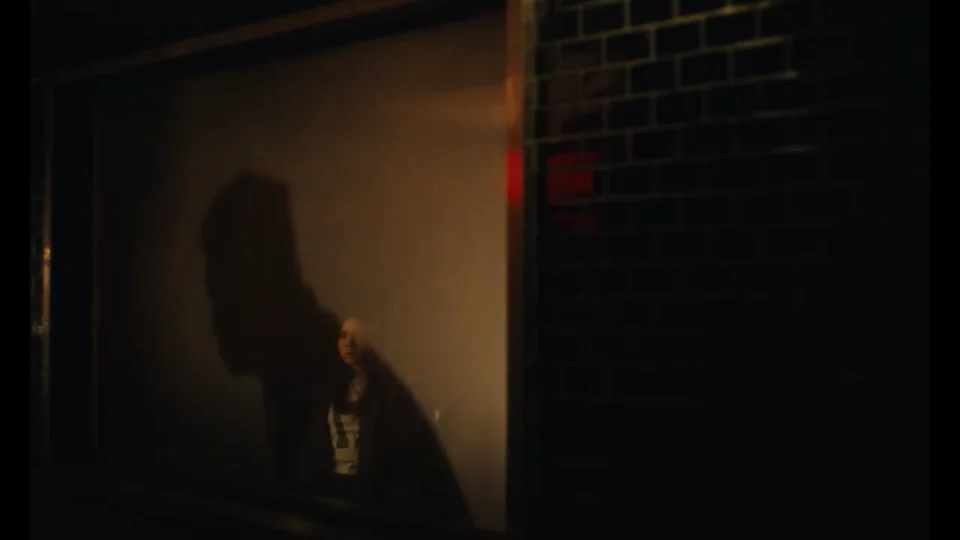
Around 00:26 the orange fire gives way to an amber-lit rectangular surface. A person’s shadow moves across it. A later angle places Chhay at a workbench, his hands busy, with the light above him. A board crowded with photographs follows. This is a carefully chosen delay. The cut gives us something he does with his hands before it tells us how to name what he remembers. When the film does come close to his face, the public question has been interrupted by a private rhythm of looking and working.
Read the first shadow in two ways
The change from fire to shadow could simply get us from one place to another. The shadow also rehearses what a puppet screen can do. At first it gives away the presence of a body but withholds detail. By the time the film gives us a date and reaches the lit venue in Sydney, a silhouette has already carried us between two settings and two ways of hearing a story. We’ve learned to look for a person’s history in an outline. The television presenter started with a perfectly clear face and still had to ask what happened.
Related story cards

Suspense · 22s
The Other Side of the Medal
A public account of a heroic act changes when a photograph prompts people to look outside the interview frame.
Read the full script →
Suspense · 22s
Flowers on the Empty Bench
An ordinary object and an old photograph let a private history become visible before anyone explains it.
Read the full script →