¡PIKA! turns down the sound when the itch takes hold
The distant bedroom shot turns restless movement into suspense.
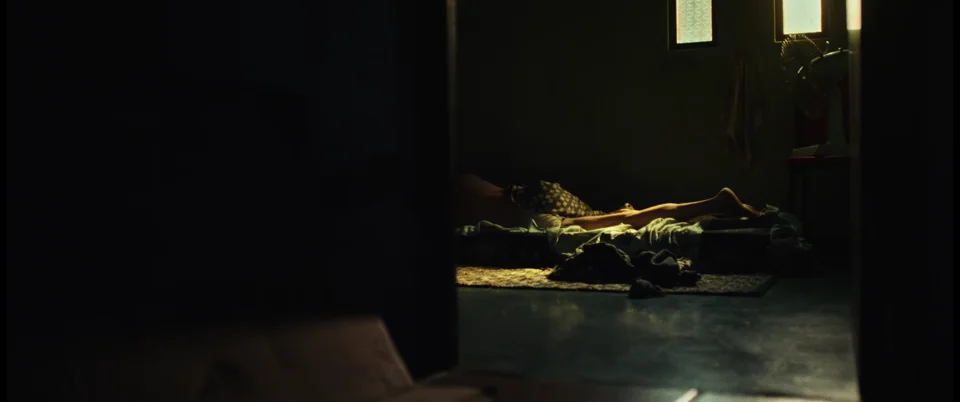
The complete bedroom opening and the start of the tiled-room scene for context, approximately 00:00–00:53 in the director’s Vimeo edition.
Alex Fischman Cárdenas’s horror short moves from a loud, red close-up to a man shifting under a blanket at the far end of a room. The change is abrupt. The image gives us space just as the soundtrack gives us less to hold on to. Within seconds, a movement as small as a bent knee can keep us watching.
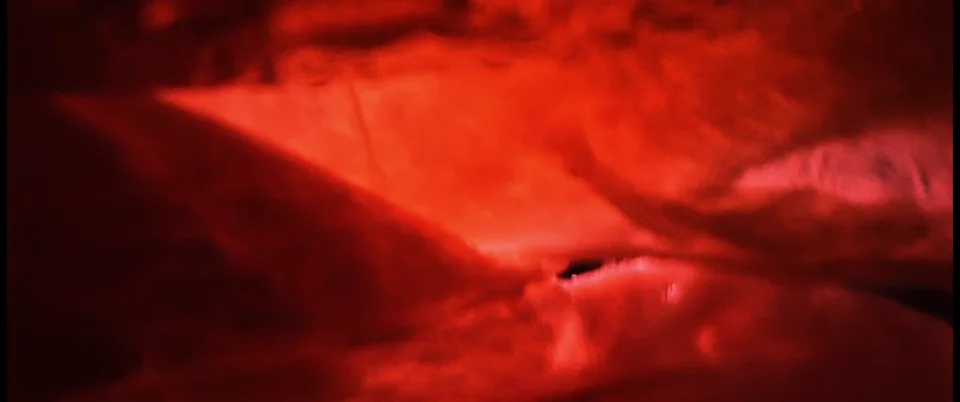
The red image leaves us looking for a cause
The first twenty-odd seconds alternate near-black frames with close red textures. At 00:13 the image looks tactile, almost wet, and the low rumble takes up much more space than any recognizable object. The image gives us too little scale to identify what we’re seeing. The opening lets that physical impression form before giving it a room or a person.
The first attempt to settle takes place at a distance
Around 00:22 the red gives way to the view through the doorway. Light from the windows finds the bedding at the back of the frame. The rumble falls away. The figure shifts under the cover, a knee rises and drops, and we stay on the far side of the room. You can read the first movement as someone changing position in his sleep. When the movement keeps returning within the same framing, it gets harder to believe he’ll get comfortable. A tight insert would tell us where to look. The wide shot lets us decide when ordinary restlessness starts to feel wrong.
The cut finally gives the itch a place
In the opening seconds of the next shot, the man faces green tiles and brings a hand to his reddened upper chest. The film can now show us where the trouble is because it has made us wait through his attempt to settle. The doorway may simply be a way to establish the apartment. Holding that view matters either way. We have already spent time watching for the movement to stop, so seeing the red patch answers a narrower question than the one we’ve been asking.
Related story cards

Horror · 20s
Keep the Applause Going
Turning off a sound makes the room newly threatening. The change can be staged in one fixed view.
Read the full script →
Horror · 22s
Under the Wallpaper
A room surface becomes more troubling the longer somebody studies a small recurring movement.
Read the full script →